|
PHOTONIC
ASSOCIATES, LLC 200A Ojo de la
Vaca Road, Santa Fe, NM 87508 USA Phone: +1-215-358-4360 (mob) crphipps@aol.com
He has always worked to improve our environment. At Livermore, he worked with Dr. Ray Kidder on the early inertial confinement fusion effort there, hoping to develop an inexhaustible source of power. At Los Alamos, Phipps worked in laser device research and began a program in pulsed laser removal of space debris, a dangerous threat to space research and space travel. Phipps and two colleagues began the Los Alamos laser effects program in 1983, using lasers from the UK to Albuquerque to measure the momentum ("impulse") lasers can deliver to many different materials. Theory he developed from that data is still widely used.
He was Associate Director for the Alliance for Photonic Technology from 1992 until 1995. This was a collaborative effort with UNM, Kirtland AFB and Sandia National Labs to commercialize photonics research in the Rio Grande Corridor. It succeed in creating several Cooperative Research & Development programs at all the Labs.
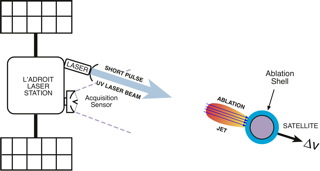
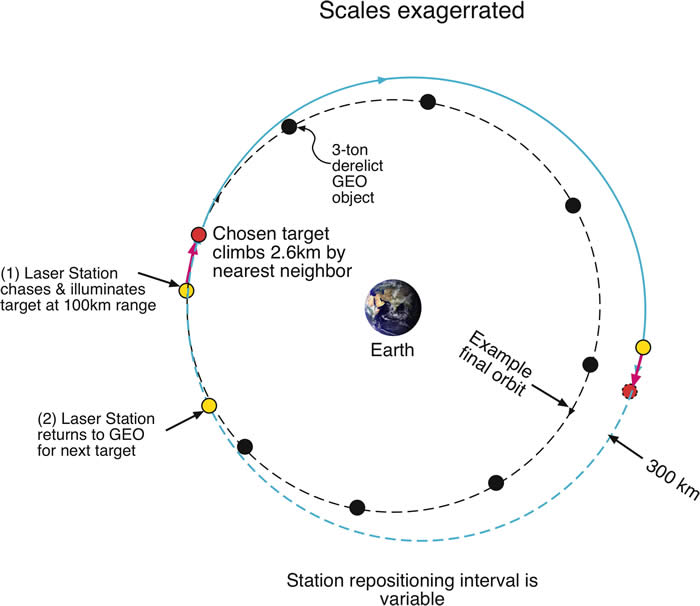
In 1995, he founded Photonic Associates, LLC to investigate the new field of laser space propulsion, of which debris removal is a special case. Dr. Phipps invented the ground-based ORION concept for clearing space debris. He now favors space-based laser stations ("L'ADROIT") for this purpose. Raising defunct GEO satellites into graveyard orbits is another application. Did I mention laser rockets? We've published on this recently!
International conferences: Dr. Phipps has organized and chaired twelve international conferences on High Power Laser Ablation since 1998, in Santa Fe, Osaka and Taos. HPLA 2018 had 150 attendees, from 16 countries [26 from France!]. It was a great success. HPLA2021 occurred virtually the week of April 11, 2021.
Then, we will have an in-person meeting hosted by SPIE at Hotel La Fonda, February 25 – March 1, 2024.
Our keynote speakers include Dr. Andrea Kritcher of LLNL discussing the achievement of ignition there in December, Dr. Razvan Stoian discussing ultrafast laser extreme volume nanostructuring, and Dr. Sergio Carbajo discussing next generation attosecond physics.
PALLC is a veteran-owned, Santa Fe high-technology company.
We
are proud to have included among our clients:
· AFRL
Edwards AFB ·
Alliant
Tech Systems, Newington, VA ·
Anteon
Corporation, Dayton, OH ·
Bekey Designs, Inc., Annandale, VA ·
Data
Technology, Inc., Woburn, MA · Enerpulse
Technologies, Holdings, Belleveue, WA ·
Lawrence
Livermore National Laboratory ·
NASA
Headquarters, Washington, DC ·
NASA
Marshall Spaceflight Center, Huntsville, AL ·
Northeast
Science and Technology, Williamsburg, VA ·
Red Cone Research, Conifer, CO ·
Sirius Associates, Huntsville, AL · US Air
Force Office of Scientific Research ·
US
Department of Defense · US
Missile Defense Agency
PA analytical and numerical
models: · A widely-used analytical model for predicting pressure generation on opaque surfaces in vacuum, caused by laser pulse duration from 100ps to 1ms, across the spectrum from excimer to carbon dioxide laser wavelengths. · Codes to calculate 1-D pressure and impulse, and the transition between the vapor regime and plasma-dominated regimes · Simulation of ground-to-orbit flight of a cone-shaped ablation-driven vehicle through a real atmosphere with velocity- and density-dependent drag coefficient Dr. Phipps' selected publications are here.
PA products are summarized here.
Please check out our Springer Book, "No Wonder you Wonder," which we hope makes science and technology interesting to young folks and their folks! It is in the top 1/2% of Springer Physics book sales. Buy my book!
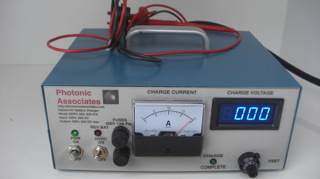
Responsive to growing demand for electric and hybrid cars repair professionals, we also have a line of high voltage battery chargers and related equipment. We specialize in custom designs! Take a look!
Finally, an embryonic opinion page is here or, if you're French, here or here |
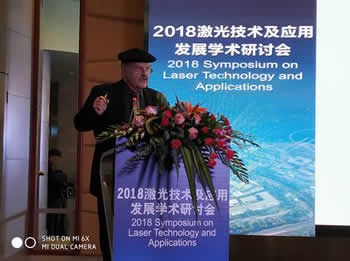
Dr. Phipps speaking in Chengdu
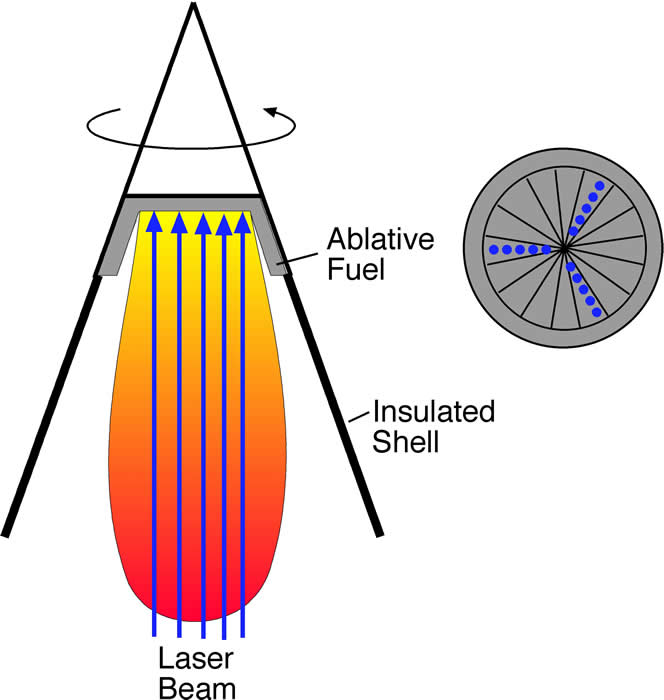
Make a Laser Rocket
Raising GEO Satellites
Laser Space Propulsion
Laser Plasma Thruster
300 Volt, 20A BatteryCharger
|